
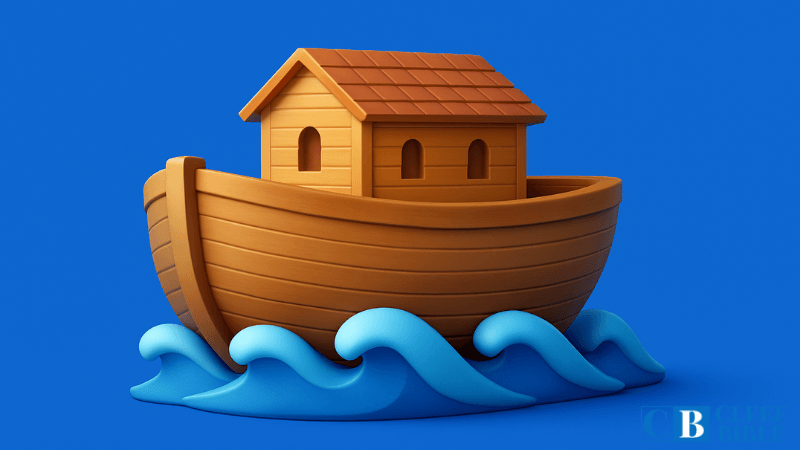
Did a ship capable of saving all of humanity and thousands of animals from global judgment really exist?
The story of Noah's Ark is not only one of the best-known stories in the Bible, but also one of the most debated enigmas in history, archaeology, and faith.
From ancient generations to the present day, this episode has sparked fascination, skepticism, and profound spiritual lessons.
In this article, we'll explore everything surrounding Noah's Ark: its construction, its symbolism, the evidence that has been sought... and what it still means to us today.
What is Noah's Ark and why is it so famous?
Can a single vessel become a symbol of judgment, hope, and salvation for all humanity?
Noah's Ark is one of the most well-known and talked-about stories in the Bible. According to the story in the Book of Genesis, God commanded Noah to build a great ark to save his family and all animal species from a universal flood that would end the corruption of the earth. This narrative has transcended generations, cultures, and religions, becoming a powerful image of obedience, faith, and redemption.
Its place in the Bible, culture and universal history
The story of Noah's Ark is found in chapters 6 through 9 of Genesis and has been interpreted both literally and symbolically by believers and scholars. Its message transcends time: it speaks of a just God who judges evil, but who also offers a way of salvation.
Beyond the biblical text, the Ark has inspired works of art, films, scientific studies, and even theme parks. Its structure, the animals it contains, and the image of the rainbow have been part of the collective imagination for centuries.
Was it a literal or symbolic event?
This story has sparked intense debate: Is it a real historical event with an archaeological and geological basis? Or is it a spiritual parable about obedience and grace?
Some defend the historicity of the Flood with evidence from geological layers and similar myths in other cultures. Others see it as a profound theological language that addresses universal themes: human corruption, divine judgment, and the salvation offered by faith.
In any case, Noah's Ark remains a key figure in understanding the character of God and the condition of the human being in the face of justice and mercy.
Biblical context of the Ark
Humanity before the flood
Before the Flood, humanity had become deeply corrupt. Genesis 6:5 states that “Every intent of the thoughts of their hearts was only evil continually”. Violence, injustice, and abandonment by God were the norm, to the point of saddening the Creator for having created human beings (Genesis 6:6). This decadent moral context sets the stage for the coming judgment.
Noah: Righteous among corrupt generations
In the midst of this perverse generation, Noah found grace in the eyes of God (Genesis 6:8). He was described as “a righteous man, blameless in his generations” and someone who “walked with God” (Genesis 6:9). Noah stood out not for absolute perfection, but for an obedient faith that set him apart from the rest. His example demonstrates that even in dark times, individual faithfulness matters.

The divine call to build the Ark
God revealed to Noah that he would destroy the earth with a flood and gave him specific instructions to build a Gopher wood ark (Genesis 6:14-16). Noah's obedience was immediate and total, “he did everything God had commanded him” (Genesis 6:22). This call was not only logistical, but also prophetically symbolic of future salvation, anticipating judgment and redemption.
Spiritual Purpose of the Flood and Divine Judgment
The flood was a just response from God to unrepentant evil. But beyond destruction, it also had a redemptive purpose: preserve a new humanity through Noah, establish a new beginning and show that God's grace can coexist with his justice. The judgment of the flood highlights that God takes sin seriously, but also provides a way of escape for those who trust in Him.
Design and dimensions of the Ark
Measurements and materials according to Genesis
According to Genesis 6:15, the Ark was to measure 300 cubits long, 50 wide, and 30 high, which is approximately 135 meters long, 22.5 meters wide and 13.5 meters high. It was made of gopher wood, sealed with pitch inside and out to prevent leaks. This design made it a stable boat, although not designed for sailing, but to float safely during the flood.
Internal distribution: floors, compartments and door
The Ark was divided into three levels, with many interior rooms or compartments for animals, supplies, and Noah's family. It had a single side door (Genesis 6:16), which has strong symbolism: there was only one way of salvation. He also owned a upper window for ventilation and lighting. The design combined functionality, safety, and spiritual symbolism.
Comparison with modern vessels
Technical studies have suggested that the design of Noah's Ark was highly stable and difficult to tip over, comparable in proportions to some modern cargo ships. Although it was not intended to maneuver or sail, its rectangular shape and proportions gave it a impressive buoyancy and resistance, which has led some engineers to consider it a viable structure for a long period of survival on turbulent waters.
The Ark as a refuge of life
Animals in pairs: how did they organize themselves?
God instructed Noah to bring into the Ark pairs of each animal species: “of every living creature […] two of every kind” (Genesis 6:19-20). It was also commanded to bring seven pairs of clean animals (Genesis 7:2). Although the text does not detail the logistical process, it mentions that the animals came to Noah, indicating divine intervention in their assembly and order. The organization within the Ark must have followed a compartmental system designed to keep each species safe and separate according to their needs.
Food storage and logistics
Noah was also instructed to store enough food for your family and animals (Genesis 6:21). This involved providing for a variety of products: grains, herbs, dried fruits, and perhaps primitive methods of preservation. Although the Bible does not provide a detailed inventory, it is clear that the Ark functioned as a self-sustaining ark for months, which speaks of divine and meticulous planning.
Caring for species during the trip
Animal care within the Ark included regular feeding, cleanliness and maintenance of healthy conditions. It is likely that some animals were in a state of lethargy or hibernation, which would have facilitated their maintenance. Although the biblical text does not specify this, the account's silence regarding conflicts or deaths suggests that God's provision and protection were present throughout the journey.
The Great Flood
Duration of the flood according to the Bible
The flood lasted 40 days and 40 nights of rain continues (Genesis 7:12), but the whole process was longer:
- Water covered the earth for 150 days (Genesis 7:24).
- The waters began to subside gradually, and the Ark rested in the seventh month (Genesis 8:4).
- Noah and his family left the Ark year and ten days after entering (Genesis 8:14-19).
The entire event lasted approximately a solar year, marking a radical change in the history of humanity.
Signs, rains and waters of the abyss
The flood started from two sources:
- The fountains of the great deep broke up, that is, sprouts of underground water (Genesis 7:11).
- The floodgates of heaven opened, representing heavy rain from above.
This duality suggests a global, not just local, cataclysm with a complete transformation of the Earth's surface. The magnitude of the event reflects the gravity of divine judgment.
Reactions of Noah's contemporaries
Although his words are not directly reported, The reaction of Noah's generation can be inferred as disbelief and mockery. According to 2 Peter 2:5, Noah was “herald of justice", that is, he warned the world. However, No one repented or sought refuge, which highlights the hardness of the human heart and Noah's solitary faith. This contrast between warning and rejection gives strength to the story's spiritual message: God warns in time, but does not force repentance.
The end of the flood and the new earth
The sending of the raven and the dove
After the rain stopped and the waters began to subside, Noah sent a crow who “went to and fro until the waters were dried up” (Genesis 8:7). Then, sent a dove, which returned without finding a place to land. The second time it brought a olive branch, and the third did not return. This process not only showed Noah's wisdom and patience, but also progressive signs of restoration and hope on the renewed earth.
The Ark lands on Mount Ararat
Genesis 8:4 states that the Ark stopped “on the mountains of Ararat", which many today identify with a mountain range in eastern Turkey. Although its exact location is still debated, this point marks the moment when salvation becomes stability. Noah waited many more days before leaving, demonstrating total dependence on God's guidance.
The Exit from the Ark and the First Altar of Worship
Once the soil was dry, God himself commanded Noah to leave the Ark (Genesis 8:15-17). In doing so, Noah built an altar and offered sacrifices of gratitudeThis act was key: worship before reconstructionNoah recognized that he had been saved by grace and not by merit, and his offering pleased God, who made eternal promises from that moment on.
God's covenant with Noah
The rainbow as a sign of the new covenant
After the flood, God established a covenant with Noah and all creation (Genesis 9:8-17). The rainbow was the visible sign of this covenant, a promise that He would never again destroy the earth with a flood.Every time the rainbow appears, it serves as a reminder of the God's commitment to humanity: justice, but also fidelity and mercy.
Mandate to fill the earth
God repeated to Noah and his sons the same command given to Adam: “Be fruitful and multiply” (Genesis 9:1). This call not only had a population aspect, but also spiritual and moral: to rebuild society with an awareness of past judgment and present grace. It was a new beginning under a new consciousness of God.
Promises and warnings after the flood
God blessed Noah, but also set limits and warnings:
- Respect for life, represented by the prohibition of eating blood.
- The responsibility for the shedding of human blood (Genesis 9:5-6).
These instructions reveal a God who, after judging, establishes order, respect for life and structures for fair coexistence. Thus, the covenant with Noah marks the beginning of a new stage in the history of humanity under grace, but with moral responsibility.
Symbolic and spiritual interpretation
The Ark as a figure of salvation
Throughout the history of the Christian faith, Noah's Ark has been seen as an image of Christ. Just as there was only a door in the Ark, there is also only one way to salvation: Jesus (John 10:9). The Ark preserved life in the midst of judgment, just as the cross offers refuge from eternal judgment. It is a symbol of redemption, security and new life.
Noah as an example of faith and obedience
Hebrews 11:7 states that “By faith Noah, being warned by God of things not yet seen, prepared an ark"His obedience was countercultural, constant and silent for decades. Noah He didn't need to see the rain to believe in the flood, which makes him a model of active faith. His life demonstrates that obedience to God protects, transforms and leaves a spiritual legacy.
The Flood as Judgment and New Beginning
The Flood is a narrative of fair judgment, but also of divine renewalJust as water cleansed the earth, it also represents the beginning of something new. This pattern is repeated throughout the Bible: death followed by resurrection, destruction followed by restoration. The flood anticipates, in a symbolic sense, the final judgment and the creation of “new heavens and new earth” (2 Peter 3:6-13).
Noah's Ark in archaeology
Is there scientific evidence of the flood?
Although there is no consensus, Many geologists have found evidence of ancient catastrophic floods in various parts of the world. Theories such as that of Black Sea suddenly flooded or layers of marine sediment in high-altitude areas have been interpreted as possible evidence of a great flood. However, conclusive and universal proof of a global event like that of Genesis has not been found.
Searches for the Ark on Mount Ararat
For centuries, adventurers, archaeologists and explorers have claimed see remains of the Ark in the mountains of AraratAerial photographs, local witnesses, and strange formations have fueled the mystery. Some modern expeditions, such as those of Ron Wyatt or the Chinese-North Korean group NAMI, have claimed finds, though without conclusive scientific verificationMount Ararat, due to its difficult geography and extreme climate, remains a area open to exploration and debate.
Criticisms, frauds and modern theories
Some archaeological claims have been discredited by experts, revealing frauds or sensationalist interpretations. On the other hand, skeptical critics consider the Ark to be a myth adapted from ancient tales such as that of Gilgamesh. However, even within academia, there are those who admit that the biblical story could have preserved a real echo of a great ancient water catastrophe. Thus, the story of the Ark remains at the center of debates among faith, science and symbolism.
Comparison with other flood accounts
The myth of Utnapishtim (Epic of Gilgamesh)
One of the oldest and best-known stories is that of Utnapishtim in the Epic of Gilgamesh, a Mesopotamian literary work dating from around 2000 BC. In this story, the gods decide to destroy humanity by a flood, but the god Ea warns Utnapishtim, who builds a large boat to save his family and animals. The similarities with the story of Noah are notable:
- A divine warning
- The construction of an ark
- Species preservation
- A dove sent after the flood
These coincidences have led many scholars to consider that the biblical narrative could be a more purified and theologically developed version from the oldest traditions of the Middle East.
Mesopotamian, Greek and Chinese stories
In addition to the Mesopotamian story, other cultures also include stories of a great flood:
- In Greek mythology, Deucalion and Pyrrha survive a flood sent by Zeus to destroy humanity.
- In India, Manu He is warned by a fish (an incarnation of Vishnu) about an impending flood.
- In Chinese tradition, the emperor Yao dealing with a massive flood covering mountains and valleys.
These stories suggest that The idea of a great flood is deeply rooted in humanity's collective memory.
Coincidences or echoes of a common event?
The presence of flood stories in such diverse cultures has led to two main interpretations:
- Are cultural coincidences reflecting universal fears of natural disasters.
- Are divergent echoes of the same ancient catastrophic event, probably a real flood that left a deep mark on the peoples of the past.
From a biblical perspective, the story of Noah can be considered preserves with theological fidelity the true version of a global fact that other texts transmitted in a mythical way.
The Ark in culture and art
Religious paintings, sculptures and stained glass
Throughout the history of Christian art, Noah's Ark has been represented in murals, frescoes, stained glass and sculpturesFrom medieval churches to Gothic cathedrals, the Ark symbolizes the hope in the midst of judgmentThese works portray in detail both the construction of the ark and the arrival of the animals and the flood, using a rich iconography that educated and inspired the faithful.
Representations in films and cartoons
Noah's Ark has been adapted into multiple films, from epic epics to children's films. Some of the best-known include:
- Noah (2014) directed by Darren Aronofsky, with a more artistic and apocalyptic interpretation.
- Various animated adaptations for children, with an emphasis on animals and Noah's obedience.
These versions have made the story accessible to modern audiences, although sometimes with narrative licenses that deviate from the biblical text.
Noah's Ark in museums and theme parks
In places like the Ark Encounter (Kentucky, USA), a full-scale replica of the Ark has been recreated according to biblical dimensions. This theme park combines immersive experiences, biblical teaching, and scientific exhibits from a creationist perspective. There are also biblical museums and archaeological exhibits that include models, illustrations, and studies on the Flood. These initiatives seek bring the spiritual message of history closer to the contemporary public through visual and interactive resources.
Current relevance of Noah's Ark
What does it teach modern society?
The story of Noah's Ark is not just a story of the past, but a warning and a guide for the presentIn a world marked by corruption, spiritual indifference, and moral degradation, Noah's message resonates powerfully: live with faith, obedience and responsibilityThe story reminds us that God's justice is real, but so is his ability to preserve those who obey him. In times of uncertainty, the Ark remains symbol of refuge, fidelity and hope.
The call to obey in the face of skepticism
Noah built the Ark for decades no visible evidence of the flood, which meant enduring the ridicule and rejection of his generation. This story challenges us today to be faithful to God's principles even if they are not popularTrue faith involves anticipated obedience, and the story encourages us to live with conviction, even in the midst of a culture that doubts biblical truth.
The ecological message of preserving life
The Ark also offers a powerful lesson about human responsibility towards creation. God commanded Noah to care for all living species, which makes the story a call to stewardship of life and the environmentIn a world threatened by climate change and biodiversity loss, the message of the Ark reminds us that Preserving life is part of our spiritual mission.
Book recommendations about Noah's Ark
📘 “The Mystery of Noah’s Ark” – Charles Berlitz
A work that explores the various theories about the location of the Ark, including historical evidence, ancient myths, and archaeological finds.
📘 “The Flood: Myth and Reality” – Roberto Badenas
This book offers a profound reflection on the flood, contrasting the literary, theological, and cultural elements of the biblical account with those of other traditions.
📘 “Noah's Ark: A Feasibility Study” – John Woodmorappe
A detailed technical analysis that answers key questions about the Ark's design, animal feeding, available space, and operational feasibility. Ideal for those seeking a scientific perspective based on the biblical text.
Frequently Asked Questions About Noah's Ark
Where is Noah's Ark today?
The location of the Ark remains a mystery. The Bible indicates that rested on the mountains of Ararat (Genesis 8:4), possibly in present-day Türkiye. There are theories and expeditions that claim to have found remains, but there is no conclusive archaeological evidence to date.
What animals entered the Ark?
According to Genesis 6:19-20, males and females of each animal species entered, both land-based and flying. Genesis 7:2-3 also mentions seven pairs of clean animals and a pair of the unclean. Marine animals are not included, as they could survive in the water.
How long did the flood last according to the Bible?
The flood lasted 40 days and 40 nights of rain, but The waters covered the earth for 150 daysNoah and his family They were in the Ark for about a full year, from the beginning of the flood until the earth was dry and they were commanded to leave (Genesis 7–8).
How many people were saved in the Ark?
Genesis 7:13 says they were saved eight peopleNoah, his wife, his three sons (Shem, Ham, and Japheth), and their sons' wives. They were the only human beings spared from the judgment of the flood.
Can an exact replica be built today?
Yes. In Kentucky (USA), the museum Ark Encounter built a full-scale replica of the Ark, based on biblical measurements. The project demonstrated that It is possible to recreate the design of the Ark with modern technology, although its exact functionality is still under study.
Was the Ark literal or a spiritual symbol?
For believers, the Ark was a literal event with deep spiritual symbolism. It represents God's judgment on sin, but also his saving grace. Some scholars see the story as a theological type more than a historical event; others claim it as real story confirmed by various cultures.
Is there scientific evidence of the flood?
There is no scientific consensus on a global flood. However, geological evidence of major regional floods There are layers of sediment, such as those in the Black Sea or layers of sediment on multiple continents. These could correspond to a real historical event culturally reinterpreted in different narratives.
Why did God choose Noah?
Genesis 6:9 says that Noah was “just, perfect in his generations" and “walked with God”. His faith, obedience and righteousness in a corrupt generation were the reasons why God chose him to preserve life and restart human history..
What does the Ark teach about judgment and grace?
The Ark shows that God judges sin, but also that provides a way of salvation for those who believe. It is a message of justice and mercy, of warning and hope, anticipating the redemptive work of Christ, who is seen as the “Ark” to escape the coming judgment.
What does the rainbow symbolize after the flood?
The rainbow is the sign of the covenant of God with Noah (Genesis 9:13-17), promising that He would never again destroy the earth with a flood.It is a visible reminder of the God's faithfulness, his commitment to creation and his willingness to maintain peace with humanity.
Conclusion
Noah's Ark is much more than an ancient story: it is a symbol of faith, obedience, and hope in the midst of judgment.
It represents God's faithfulness to save those who trust in Him, even when all seems lost. Through its construction, its care for creation, and its role as a refuge in the storm, the Ark teaches us that Every act of obedience can be a door to redemption.
Today, the call remains valid: Are we building our lives on obedience or indifference?
We'd love to hear your thoughts:
What teaching from Noah's Ark most touched your life or spiritual perspective?
Leave us your comment below and let's talk.
Discover How the Bible Can Transform Your Life
- Bible Study – explore the teachings of the Bible and find answers to life’s challenges.
- Fundamental Beliefs – delves into the principles that have guided millions through the centuries.
- Spiritual Growth – Strengthen your faith with studies designed to bring you closer to God.

Discover How the Bible Can Transform Your Life
- Bible Study – explore the teachings of the Bible and find answers to life’s challenges.
- Fundamental Beliefs – delves into the principles that have guided millions through the centuries.
- Spiritual Growth – Strengthen your faith with studies designed to bring you closer to God.

Would you like to save this content?
Download this article as a eBook PDF professional.
📥 DOWNLOAD EBOOK NOW













 English
  Spanish
  French
0 Comments